
Teaching Middle Schoolers How AI Really Works#
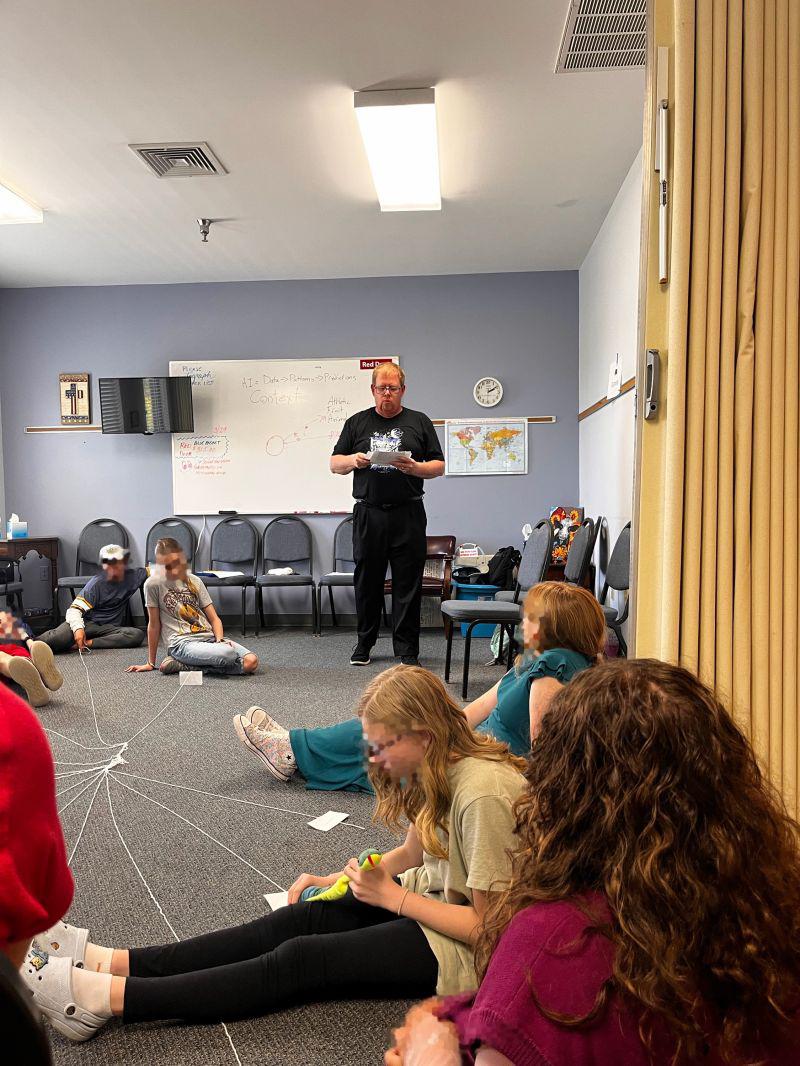
Yesterday I had the opportunity to teach a group of middle school students at the Honours Guild Homeschool Cooperative in Wilmington, North Carolina about Artificial Intelligence — and honestly, it was one of the most rewarding experiences I’ve had in a long time.
When most people hear “AI,” they think about futuristic robots, ChatGPT, or something mysterious happening inside giant data centers. But my goal wasn’t to impress students with complicated technical jargon.
It was to help them understand something much more important:
AI is not magic.
AI learns from people.
And once students understand that, everything changes.
Starting with a Simple Question#
We opened with a question almost every student could relate to:
- Who has used Siri?
- Alexa?
- ChatGPT?
- TikTok?
- YouTube recommendations?
Almost every hand in the room went up.
Then I asked:
“Do you think AI is actually smart?”
That question sparked exactly the kind of curiosity I was hoping for.
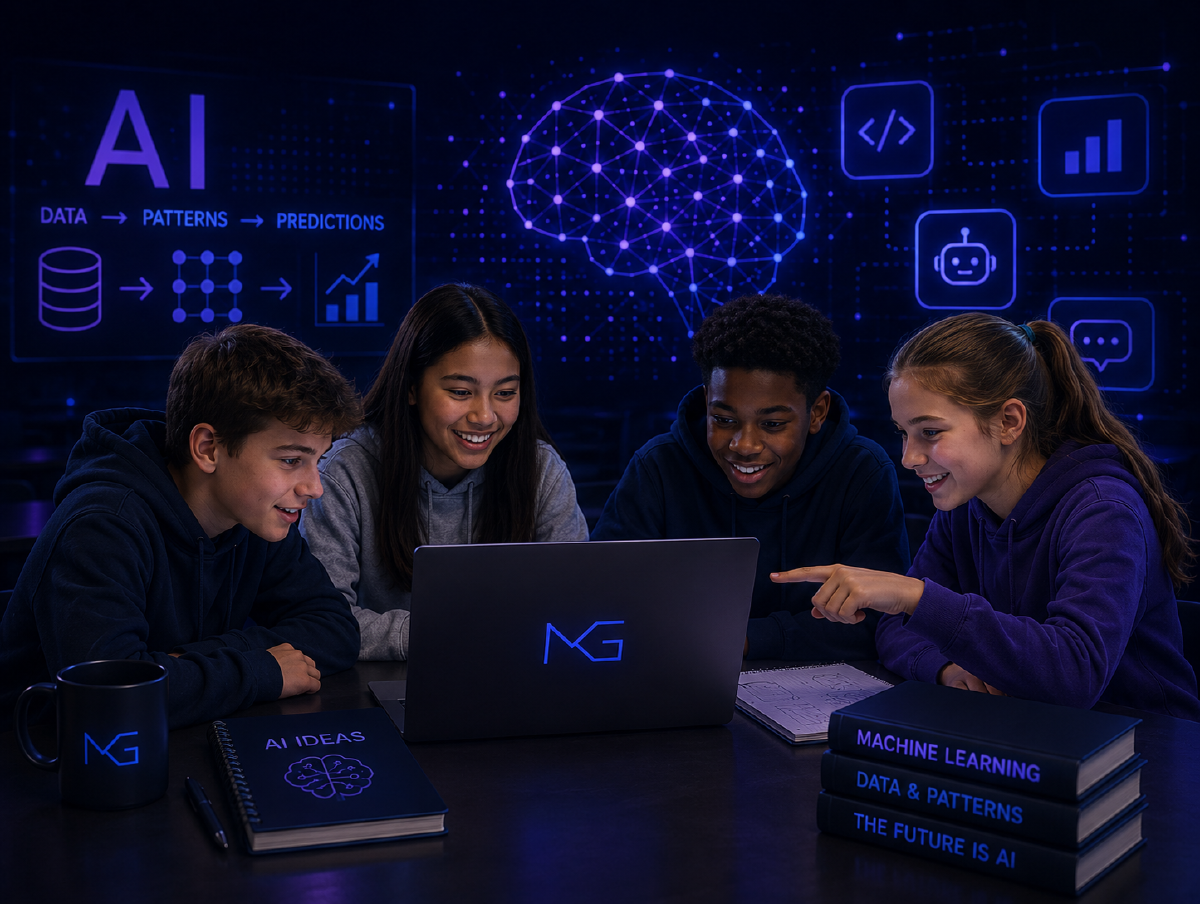
Rather than treating AI as some mysterious black box, we broke it down into three simple ideas:
Data → Patterns → Predictions#
That became the core theme of the session.
We talked about how AI systems learn from examples (data), discover connections (patterns), and then try to guess what comes next (predictions).
To make the idea tangible, we started with something incredibly simple:
2, 4, 6, 8…
The students immediately answered:
“10!”
And that became the teaching moment.
They had just behaved like AI.
Not because they were “thinking” like a computer, but because they recognized a pattern and predicted what came next.
That realization landed immediately.
Becoming the AI#
One of the most engaging parts of the class was a hands-on Large Language Model (LLM) activity.
Instead of explaining language models with slides and technical diagrams, we physically acted one out.
Each student received a word on an index card, while I stood in the center of the room holding strands of yarn connecting different words together.
The yarn represented relationships between words.
Some connections were strong:
- “The” → “cat”
Some were weak:
- “The” → “airplane”
The students quickly began to understand something powerful:
Large Language Models don’t “think” like humans. They predict based on connections.
That distinction is critical.
Today’s AI systems are astonishingly capable, but underneath all the impressive responses and conversations is still a prediction engine trying to determine what comes next based on patterns it learned from training data.
Watching middle school students grasp that concept through interaction instead of memorization was incredible.
Teaching Bias Through Mistakes#
One of the most important sections of the lesson focused on bias in AI systems.
Instead of defining bias academically, we demonstrated it.
I showed the students examples of only small dogs during a mock “training” exercise. Then I introduced a large dog image and asked them what the AI might think it was.
Some students guessed wolf. Others guessed bear.
And suddenly they understood.
If an AI only learns from limited examples, it develops an incomplete understanding of the world.
That moment created an important realization:
AI is only as good as the data it learns from.
And more importantly:
Bad or incomplete data can create unfair outcomes.
For students growing up in a world increasingly shaped by algorithms, understanding this early matters enormously.
The Moment Everything Clicked#
The section that resonated most deeply with the students was when we connected AI to platforms they already use every day.
YouTube. TikTok. Netflix. Instagram.
I asked them:
“Do you think your feed is random?”
Some said yes.
Then we unpacked what’s actually happening behind the scenes.
These systems track:
- What you click
- What you watch
- What you skip
- How long you stay engaged
Then they use all of that information to predict what you will watch next.
Suddenly AI stopped feeling abstract.
The students realized they interact with predictive systems constantly.
And then came the line that changed the energy in the room:
“You are not just using AI… You are training it.”
That realization hit hard.
Because it’s true.
Every click teaches the system something.
Every interaction shapes future recommendations.
Every engagement feeds the algorithm.
Simulating a Recommendation Algorithm#
To bring everything together, we ended with a live simulation called:
“You Are the Algorithm”#
Students moved into different corners of the room representing:
- Gaming
- Sports
- Food
- Music
One student played the role of “The Algorithm.”
As students chose interests, the algorithm rewarded the most popular content category with more attention and visibility.
Then students were allowed to move again based on what was being promoted more heavily.
Predictably, larger groups became even larger.
And in just a few minutes, the students physically experienced a recommendation feedback loop.
That led to one of the most important questions of the day:
“What happens if AI only keeps showing you the same kind of content?”
The discussion that followed was thoughtful, honest, and surprisingly mature.
Students talked about:
- Missing new ideas
- Getting stuck in one mindset
- Seeing only one perspective
- Being influenced without realizing it
That’s exactly the kind of critical thinking we need more of.
Why This Matters#
The goal of the session was never simply to teach kids about technology.
It was to help them think critically about the systems shaping their world.
AI is no longer “future technology.”
It is already influencing:
- What people watch
- What people believe
- What people buy
- What people pay attention to
And the next generation needs more than technical skills.
They need awareness.
They need curiosity.
They need the ability to ask:
- Why did the algorithm show me this?
- What data trained this system?
- What biases might exist here?
- How is this influencing me?
Those are the real AI literacy skills that matter.
Final Thoughts#
At the end of the session, I told the students something I genuinely believe:
“The future of AI isn’t just built by engineers. It’s built by every person who uses it.”
That includes all of us.
Huge thank you to Gina Good and the Honors Guild Homeschool Cooperative for the opportunity to teach such an engaged and thoughtful group of students.
The future is going to belong to people who understand not just how to use AI — but how AI uses us.
And based on the conversations yesterday, I’m optimistic about the next generation.
I’m a Senior Technical Program Manager open to remote roles in AI/ML platforms, EdTech, DevRel, and enterprise SaaS. Connect on LinkedIn.